
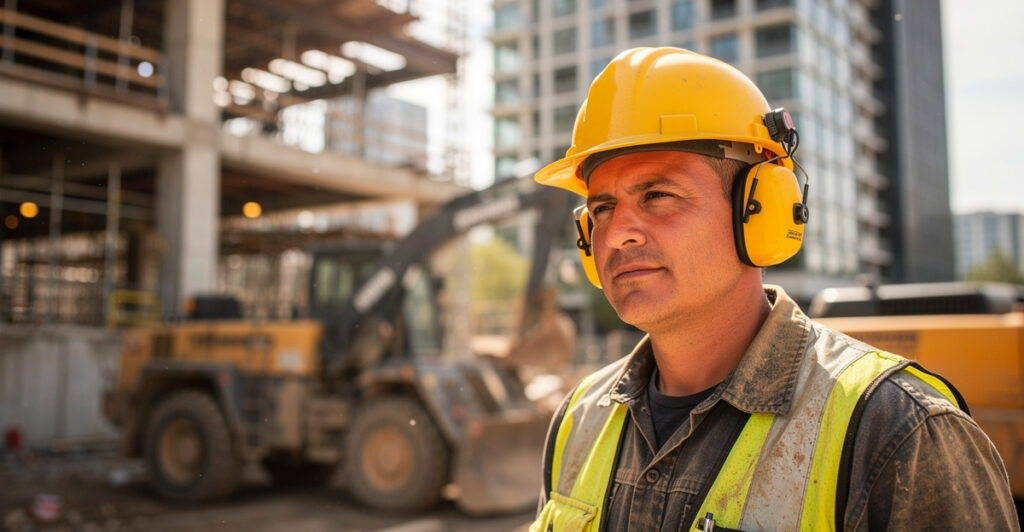

If you’ve ever lived or worked near a building site, you know the drill: that relentless hammering, the roar of heavy machinery, and the constant rumble of trucks. Construction site noise is one of the top complaints in cities worldwide, and honestly, I get it. As someone who’s spent years on job sites, I can tell you the noise hits different when you’re on the receiving end at home.
The good news? There are real, practical things you can do about it, whether you’re a resident trying to survive a nearby project or a contractor looking to be a good neighbor. Let’s break it all down together.
⏱ No time to read? Here’s the quick rundown:
- Construction noise commonly reaches 85 to 110 dB, well above safe thresholds.
- Most cities restrict noisy work to 7 AM – 7 PM on weekdays, with tighter weekend rules.
- You can soundproof your space with double glazing, acoustic curtains, and white noise machines.
- Contractors can use low-noise equipment and acoustic barriers to cut down the racket significantly.
- If noise exceeds legal limits, you have the right to file a complaint with your local authority.
Where does all that construction noise come from?
Before you can fight the noise, it helps to understand what’s making it. A typical construction site is basically an orchestra of loud machines, and not the pleasant kind. From jackhammers breaking concrete to concrete mixers churning all day long, each piece of equipment adds its own layer of sound.
Then you’ve got the heavy trucks hauling materials in and out, cranes lifting steel beams, and power saws cutting through wood and metal. Add in the shouting between workers (because, well, nobody can hear anything), and you’ve got yourself a serious wall of noise. Understanding the sources helps you pick the right solution for your situation.
How loud is construction noise really?
Let me put things in perspective. A normal conversation sits around 60 dB. The World Health Organization recommends keeping outdoor noise below 53 dB to avoid health effects. Now look at what a construction site throws at you.
Noise levels of common construction equipment
This table gives you a clear picture of what you’re dealing with. These measurements are taken at roughly one meter from the source, which is what workers experience directly.
As you can see, most construction equipment blasts well past the 85 dB threshold where hearing damage begins. That’s not just uncomfortable, it’s genuinely dangerous with prolonged exposure.
Practical solutions if you live near a construction site
Alright, let’s get to the good stuff. You don’t have to just sit there and take it. There are proven ways to seriously reduce the noise pollution coming into your home, and some of them are surprisingly simple.
Soundproofing your home against construction noise
Your windows are the weak link. If you’re still running single-pane glass, upgrading to double or triple glazing can cut noise by 25 to 35 dB. That’s a game changer. If a full window swap isn’t in the budget, acoustic sealing strips around your existing frames will help close the gaps where sound sneaks in.
Heavy curtains designed for sound absorption are another solid move. They won’t block everything, but combined with sealed windows, the difference is noticeable. If you’re planning a renovation, consider adding acoustic panels to the wall facing the construction site. By the way, if you’re into that kind of DIY project, check out this guide on using MAP plaster for wall panels, it’s a handy skill to have.
« A white noise machine or a simple fan can mask a surprising amount of construction racket. It won’t eliminate it, but your brain stops fixating on every bang and drill. »
Personal hearing protection that actually works
Sometimes, the simplest fix is the best. A good pair of foam earplugs (NRR 30+) costs almost nothing and drops the noise significantly. For something more comfortable during long stretches, active noise-canceling headphones are worth every penny.
If you work from home, noise-canceling earbuds with music or ambient sound can keep you focused while the chaos rages outside. Pair that with a white noise app, and you’d be surprised how productive you can stay.
What construction companies can do to reduce noise
Now, speaking as someone who’s been on both sides of this fence, contractors have a real responsibility here. The first step is simple: schedule the loudest tasks during mid-morning to mid-afternoon, when most people are less affected. Avoid firing up the jackhammer at 7 AM sharp, even if it’s technically legal.
Modern electric equipment is getting seriously good. Electric excavators and battery-powered tools are quieter and produce zero emissions. Yes, the upfront cost is higher, but the reduced complaints and potential fines make it worthwhile. Temporary acoustic barriers around the perimeter can also knock 10 to 15 dB off what reaches the neighbors.
And here’s one that costs nothing: communicate with the neighbors. A simple notice saying « we’ll be doing heavy demolition on Tuesday and Thursday » goes a long way. People handle noise much better when they know it’s coming and when it’ll stop. If you’re managing a stone facade renovation, letting the street know in advance is just common courtesy.
Health effects of construction noise you should know about
This isn’t just about comfort. Prolonged exposure to loud construction noise has real consequences on your body. The most obvious is hearing loss, which affects around 22 million workers in the US alone each year. But the damage goes deeper than your ears.
Chronic noise exposure increases stress hormones, disrupts sleep, and raises blood pressure. Studies published in the European Heart Journal show an 8 to 12% increase in cardiovascular disease risk for people living with persistent noise pollution. If you’re a light sleeper or work night shifts, this kind of daytime racket can wreck your health over time.
Know your rights: legal hours and how to complain
You’re not powerless here. Most municipalities have noise ordinances that set strict hours for construction work. The typical window is 7 AM to 7 PM on weekdays and 8 AM to 5 PM on Saturdays, with Sundays and public holidays usually off-limits. These rules exist for a reason, and they’re enforceable.
If a site near you is violating those hours or producing unreasonable noise, start by contacting your local council or city hall. Document the noise with timestamps, recordings, and photos if possible. If the problem persists, you can escalate to environmental health services or even take legal action for nuisance disturbance.
« Always check your local noise regulations first. What’s allowed in one city might be a fineable offense in another. Your local council’s website is usually the best place to start. »
Before going the legal route, try talking directly to the site manager. In my experience, most contractors want to avoid complaints and are willing to adjust when approached respectfully. If you’re dealing with noise in a shared building, this article on tenant rights might give you useful context about what protections exist.
The bottom line
Dealing with construction site noise isn’t fun, but it’s manageable. Whether you invest in soundproofing, grab a good pair of earplugs, or simply reorganize your schedule around the noisiest hours, you’ve got options. And if the noise crosses the line, don’t hesitate to exercise your rights.
For contractors, doing the right thing pays off. Quiet equipment, acoustic barriers, and honest communication with the neighborhood aren’t just nice gestures, they protect your reputation and keep projects on track. At the end of the day, a little effort on both sides makes all the difference.
FAQ
How to block construction noise in apartment?
Start with your windows: install acoustic sealing strips or upgrade to double glazing. Add heavy curtains or acoustic panels on the wall closest to the noise source. A white noise machine helps mask residual sounds. If you rent and can’t modify the space, noise-canceling headphones are your best friend for focus and sleep.
What are the legal hours for construction noise?
Legal hours vary by location, but the standard in most cities is 7 AM to 7 PM Monday through Friday and 8 AM to 5 PM on Saturdays. Sundays and public holidays typically prohibit noisy work. Always check your local noise ordinance for the exact rules in your area, as some neighborhoods have stricter regulations.
Can construction noise damage your hearing?
Absolutely. Prolonged exposure to noise above 85 dB causes progressive hearing loss, and most construction equipment operates well above that level. According to NIOSH, about 22 million workers in the US face dangerous noise levels annually. Hearing protection is essential for anyone regularly exposed to construction noise.
Who to call to complain about construction noise?
Your first call should be to the local council or city hall. They handle noise complaints and can inspect the site. If the work violates permitted hours, you can also contact local law enforcement. For ongoing issues, environmental health departments can issue formal warnings and fines to the construction company.
Can you sue for construction noise?
Yes, in certain cases. If the noise constitutes an abnormal disturbance and you can document the impact on your daily life or health, you may have grounds for a civil lawsuit. Gather evidence like noise recordings, medical reports, and written complaints to build your case. Consulting a lawyer who specializes in neighbor disputes or environmental law is a smart first step.

